
What is Reedy Paral·lel?
March 4, 2025 · Reedy Team
What is Reedy Paral·lel?
Reedy Paral·lel is a document intelligence engine: it turns messy, unstructured documents into clean, structured data your systems — and your own agents — can actually use.
It is not a general-purpose chatbot and not the product most visitors should start with. That product is Reedy — the AI copilot for back-to-back meetings. Paral·lel is the parsing layer behind Meet, and an early-access capability for teams that need the same engine in their own stack.
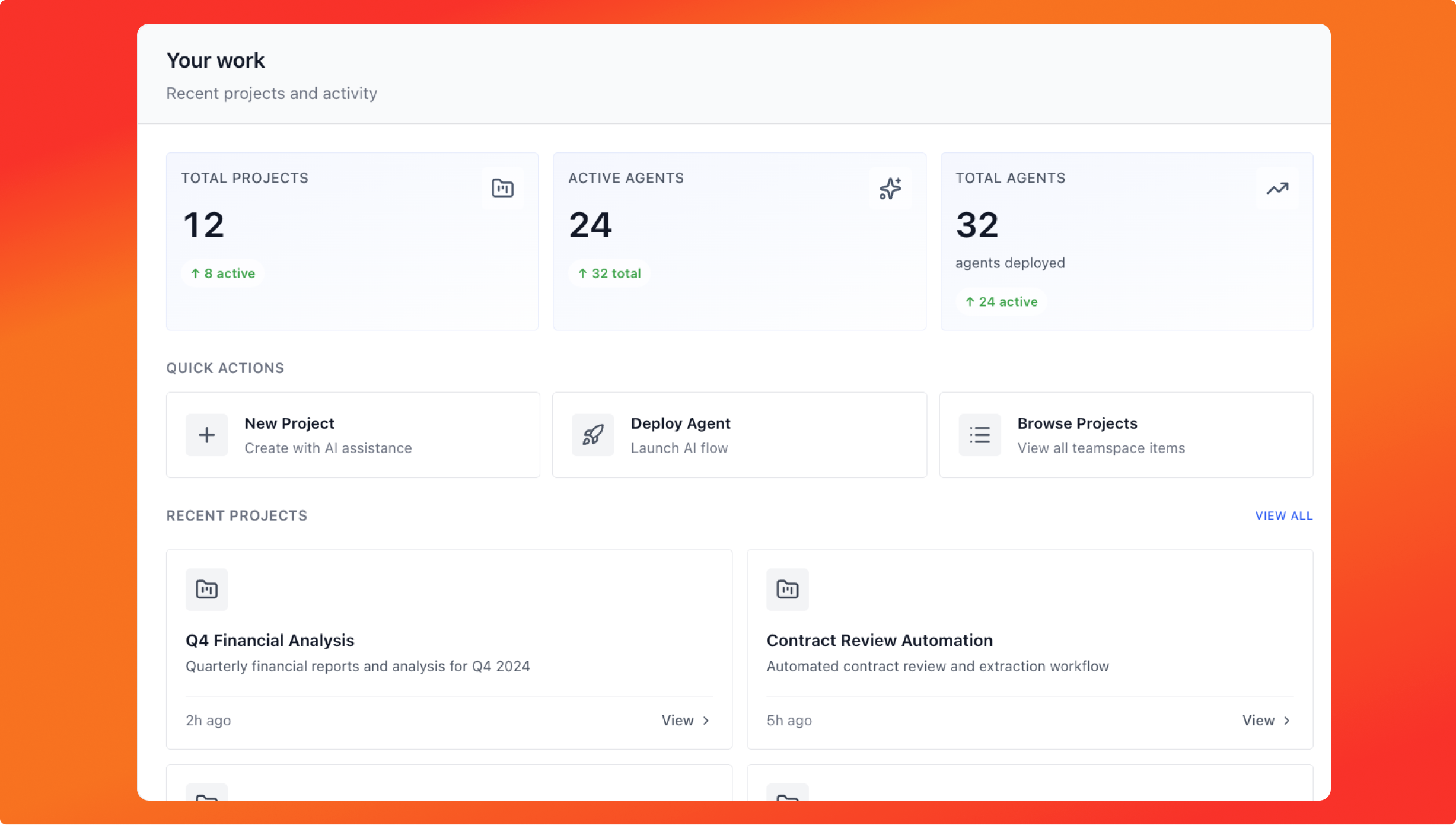
Canonical positioning: any document → clean, structured data. Deterministic by design: same input, same output, every time. Built for teams that need auditability, not surprises.
How it shows up in Reedy
We dogfood Paral·lel every day. When you upload playbooks or profile documents in Reedy, Paral·lel parses them so the live copilot and pre-meeting briefing can use that context — not a generic AI skim.
If you want the meeting product, join the Reedy waitlist. If you want Paral·lel in your product, talk to us about early access.
What problem does Reedy Paral·lel solve?
Most organizations still depend on manual document processing for critical operations: onboarding, underwriting, compliance, reporting, and more. Documents arrive as scanned PDFs, exports from legacy systems, spreadsheets, and emails — and someone has to open, read, interpret, and re-enter the data.
That creates familiar failure modes:
- Slow, fragile processes — work that should take minutes stretches into days.
- High operational cost — skilled people spend time copying values from PDFs into systems.
- Errors and inconsistency — mistakes cascade into bad decisions and rework.
- Limited scalability — volume spikes overwhelm people and brittle templates.
- Compliance risk — hard to prove consistent handling when transcription is manual.
Traditional OCR and template tools help in narrow cases, but they usually break when layouts change, need constant maintenance, and struggle with real-world documents.
Paral·lel exists to turn those documents into structured, trustworthy outputs — so dashboards, search, RAG, or someone else’s agents can reason on clean data instead of raw PDF chaos.
What does Reedy Paral·lel do?
At a high level, Paral·lel focuses on:
- Ingestion and storage — register documents, attach metadata, track lifecycle.
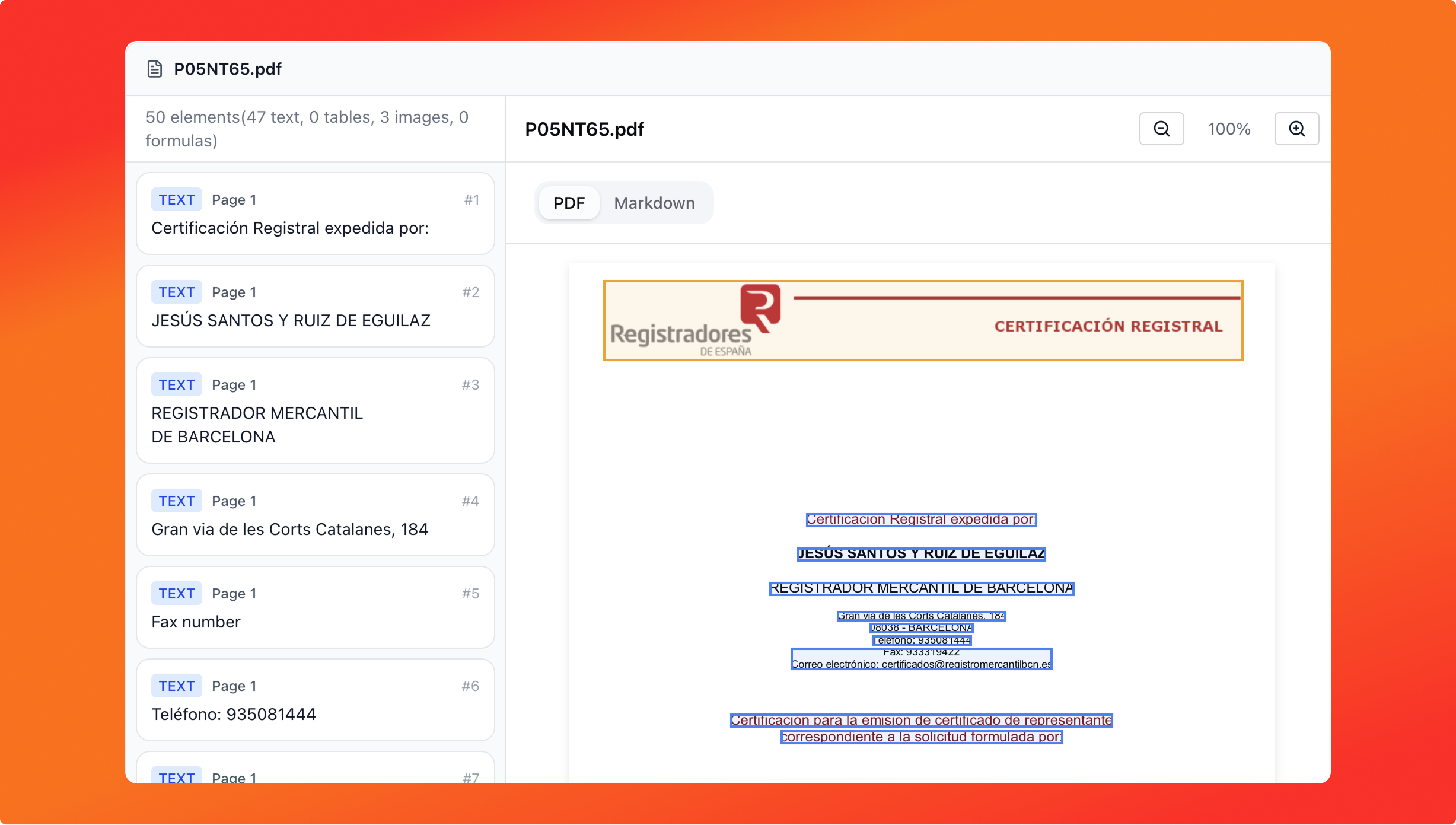
- Extraction and normalization — parse into structured JSON and markdown; normalize into document and chunk records.
- Structure and retrieval — semantic chunks with embeddings and hybrid search (vector + keyword) so you can find and cite the right passages.
- Downstream handoff — structured outputs ready for your systems, workflows, or agents — Paral·lel is the layer before reasoning, not a replacement for it.

How it works under the hood
Paral·lel is a modular pipeline: documents come in, are stored, processed, enriched with structure and search, then handed to whatever consumes the result.
Ingestion and storage
Uploads land in durable storage and are registered with the metadata you care about (owner, project, type, size, status). Storage and processing stay separate so volume can grow without coupling file location to every job.
Extraction
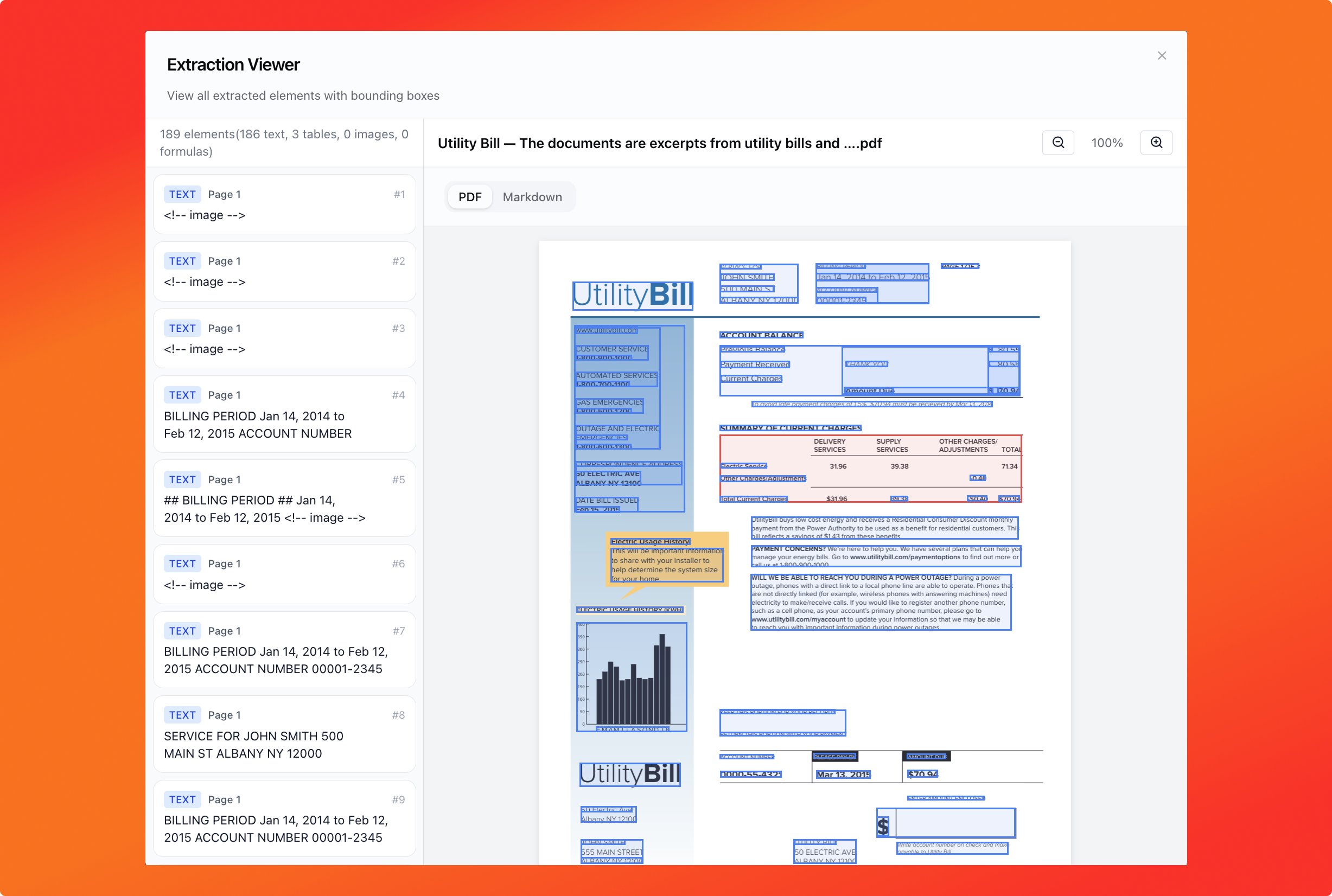
A dedicated extraction engine uses language and vision models to:
- Read varied layouts and formats.
- Extract fields, tables, and sections that matter.
- Normalize into a consistent structured representation.
Work runs asynchronously in a worker layer so large jobs do not block interactive apps (including Meet).
Structure and search
Content is broken into meaningful chunks, enriched with provenance metadata, and made searchable. That powers “find the relevant parts” and “show me where this answer came from” — citations, not a flat blob of text.
Where agents fit
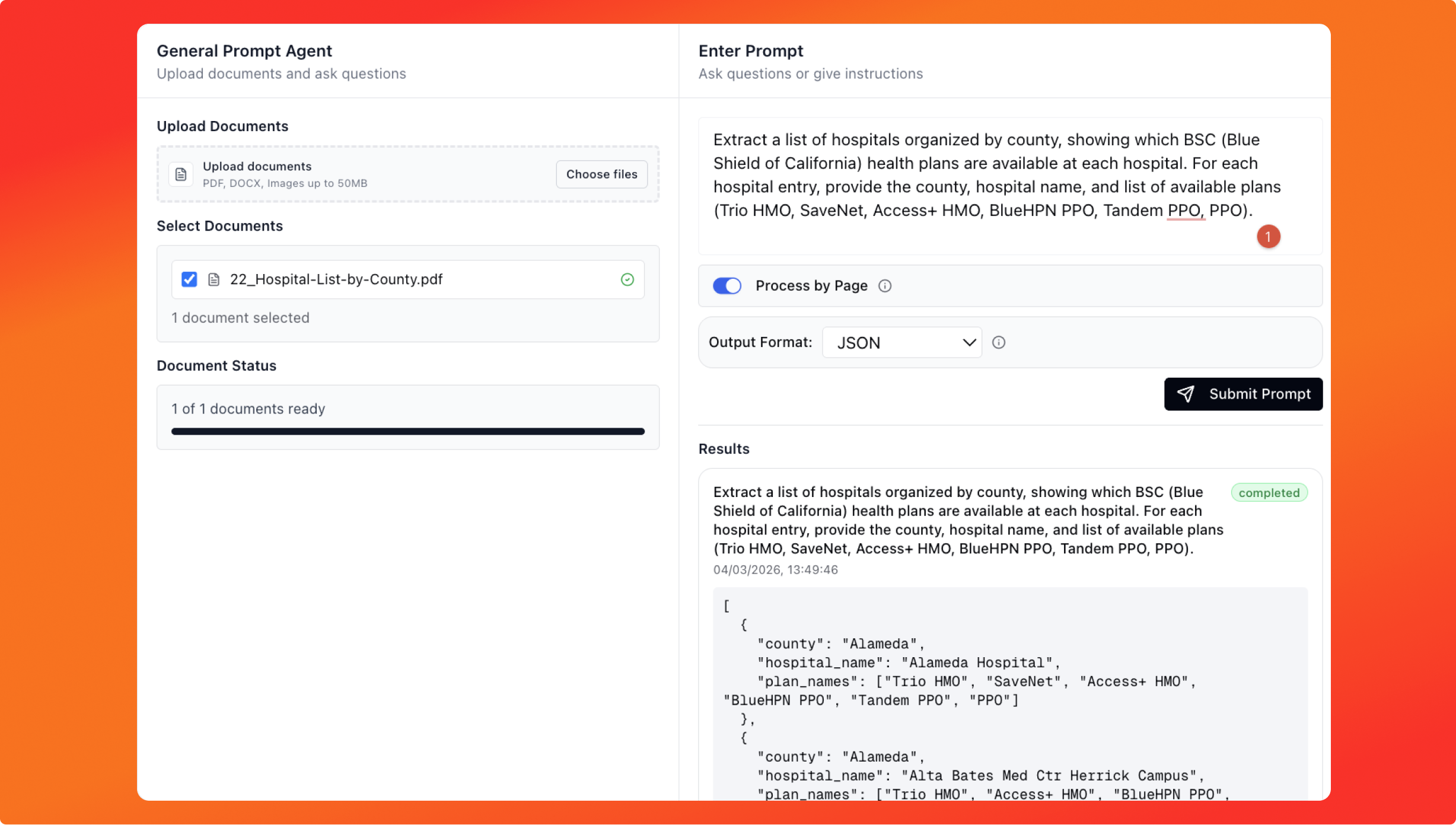
Paral·lel does not compete with agents. It is the layer that lets any agent (ours or yours) read a document reliably. You bring the decisions and business rules; Paral·lel brings structured, auditable inputs.
Architecture at a glance
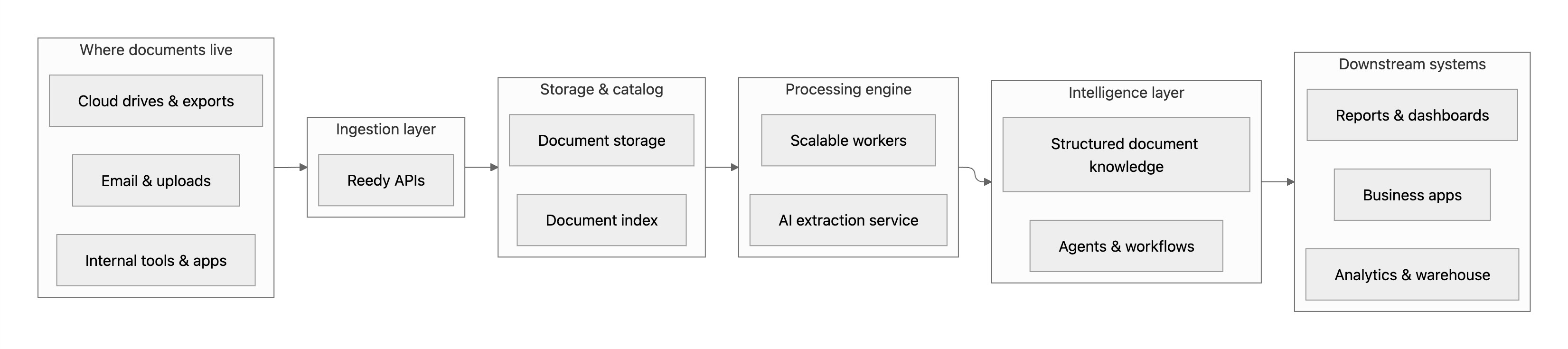
From a product perspective:
Send Paral·lel your documents, define what you need out of them, and get back structured, trustworthy results — with visibility into how you got there.
Key benefits
- Extraction you can trust — structured outputs, validation, and citations over “black box” summaries.
- Observable pipelines — statuses, retries, and metrics so ops teams can run the system.
- Scales with volume — storage + workers + a dedicated extraction server for hard formats and spikes.
- Cost visibility — track model usage so AI spend is not a surprise.
- Reusable playbooks — encode how you want documents processed and run it again consistently.
Business use cases
Paral·lel is document- and domain-agnostic. Common patterns:
Insurance
- Claims forms and supporting docs → structured case data
- Underwriting packs (loss runs, applications, financials)
- Straight-through processing for standard cases; human review for the rest
Financial services
- Loan / mortgage packs (pay stubs, statements, tax returns)
- KYC and onboarding document sets
- Features for credit decisioning from unstructured financial docs
Healthcare & ops
- Intake forms and insurance cards
- Referrals, lab reports, shipping docs, POs and invoices
Security, compliance, and trust
Document processing touches sensitive data. Design goals:
- Data control — documents and derived data in your chosen environment and region where applicable.
- Access — role-based and project-scoped separation.
- Auditability — traceable history of what processed a document, when, and with which model.
Meet first; Paral·lel when you need the engine
| You want… | Start here | |-----------|------------| | Briefings, live copilot, transcripts for meetings | Reedy waitlist | | The same document engine inside your product | Early access — contact us |
There is no public “API Today” self-serve console yet. Early access is coordinated with our team.